

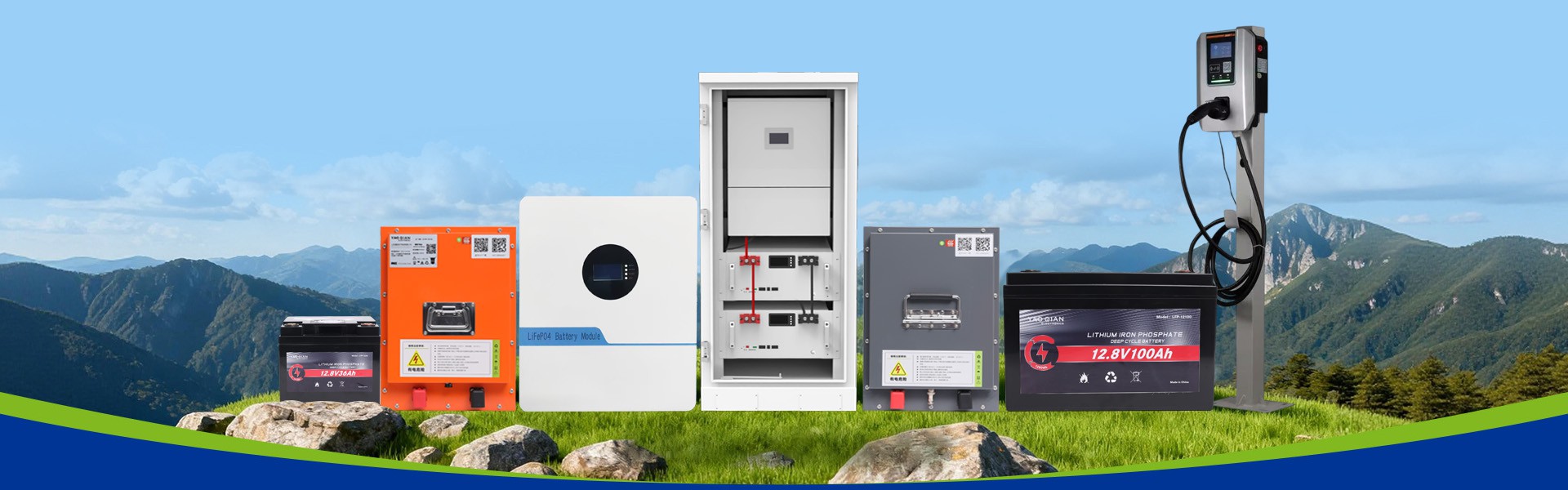
Commercial and Industrial Energy Storage System
Core Manufacturing & Engineering Solutions for Commercial and Industrial Energy Storage Systems
Commercial and Industrial Energy Storage Systems (C&I ESS) manage facility-level power consumption, mitigate peak demand charges, and provide backup power security. Built around modular LiFePO4 battery architectures, these systems integrate battery racks, hybrid PCS (Power Conversion Systems), multi-tier BMS (Battery Management Systems), and active thermal management into unified outdoor enclosures or ISO containers. Capacities range from small-scale 50kWh cabinet units to multi-megawatt containerized configurations designed for continuous industrial grid interaction.


Product Range / Product Types
Air-Cooled All-in-One ESS Cabinets:
Integrated systems featuring forced-air ventilation for uniform thermal distribution, deployed in standard commercial plants and agricultural microgrids (typical capacities: 20kW/64kWh up to 100kW/215kWh).
Liquid-Cooled All-in-One ESS Cabinets:
Advanced units utilizing liquid coolant plates to maintain strict cell temperature variances (Delta T < 3 C), engineered for heavy industrial parks, data centers, and high-C-rate cycling.
Containerized Energy Storage Systems (20ft / 40ft):
Megawatt-scale modular installations combining multiple battery strings, centralized or string PCS, HVAC environmental controls, and high-voltage distribution panels for utility or large factory deployment.
Outdoor Cabinet-Mounted Systems:
Heavy-duty galvanized sheet steel enclosures (IP54/IP55) housing modular sub-racks, built for harsh coastal or desert outdoor environments.
Key Performance & Design Features
Cell Chemistry & Safety: Utilizes Grade A prismatic LiFePO4 (Lithium Iron Phosphate) cells with thermal runaway suppression layers.
Thermal Management: Liquid-cooled variants employ smart glycol-water circulation pumps with variable-speed fans, reducing auxiliary power consumption and extending cell lifespan.
Protection & Enclosure: Fabricated from cold-rolled structural steel with multi-layer anti-corrosion powder coating; physical ratings achieve IP54 to IP55 ingress protection and C3/C4 anti-corrosion standards.
Fire Suppression Integration: Dual-agent safety architecture featuring aerosol or perfluorohexanone (C6F12O) fire suppression modules linked directly to optical smoke and temperature sensors.
Electrical Configuration: Supports multi-cluster active balancing, rack-level DC/DC optimizers, and seamless on-grid/off-grid switching times under 20 milliseconds.
Applications
Industrial Peak Shaving:
Discharges stored energy during high tariff periods to flatten facility demand curves and reduce monthly utility capacity charges.
EV Charging Station Buffering:
Relieves stressed local distribution transformers by supplying high instantaneous current for DC fast chargers.

Microgrids & Renewable Integration:
Pairs directly with commercial rooftop PV arrays to store excess solar generation for self-consumption or evening loads.
Critical Infrastructure Backup:
Operates as an uninterrupted power source for data centers, telecommunication exchanges, and automated manufacturing lines during grid outages.
Manufacturing & Quality Control
Sheet Metal Fabrication:
Enclosure frames are processed via Trumpf CNC laser cutting machines and AMADA CNC bending centers, ensuring dimensional tolerances within plus/minus 0.2 mm.
Welding & Assembly:
Structural steel frames undergo robot-assisted CO2 gas metal arc welding, followed by shot blasting and electrostatic powder coating with a dry film thickness exceeding 80 um.
Electrical Integration & Busbar Processing:
Copper busbars are CNC-punched and silver-plated; high-voltage wiring harnesses are routed using industrial cable management standards.
Factory Acceptance Testing (FAT):
Every integrated system undergoes a 72-hour full-load aging test, insulation resistance testing (1000V DC megger), Dielectric Withstand Voltage testing, and BMS communication calibration prior to crating.
Customization / OEM & ODM
Electrical Adaptability:
Custom design of AC output voltage (e.g., 380V, 400V, 480V, 690V) and frequency (50Hz/60Hz) to match regional grid codes.
Capacity Scalability:
Flexible DC-side expansion supporting parallel connection of up to 10 cabinet units or modular container blocks.
Enclosure Customization:
Tailored paint RAL color codes, corporate logo laser etching, and customized seismic or wind-load structural reinforcements.
Protocol Integration:
Open communication protocol configuration supporting Modbus TCP, CAN 2.0, and IEC 61870-5-104 for integration into third-party EMS platforms.
Factory Testing Room

fAQ
We're well-known as one of the leading commercial and industrial energy storage system manufacturers and suppliers in China, featured by quality products and good price. Please rest assured to buy customized commercial and industrial energy storage system made in China here from our factory.
Integrated battery energy storage system for C I applications, Outdoor cabinet mounted LiFePO4 battery ESS, Container Energy Storage System