

Inverters
Core Manufacturing & Engineering Solutions for Solar and Energy Storage Inverters
Solar and Energy Storage Inverters convert direct current (DC) generated from photovoltaic panels or stored in battery banks into synchronized alternating current (AC) for grid interaction or local loads. Built around advanced DSP (Digital Signal Processing) chips and high-efficiency IGBT/SiC power semiconductor modules, these units manage power flow, execute maximum power point tracking (MPPT), and provide stable voltage references. Power ratings scale from fractional residential modules up to multi-megawatt commercial central and string configurations.


Product Range
Hybrid Energy Storage Inverters:
Integrated bidirectional units managing simultaneous PV generation, battery charge/discharge cycles, and grid import/export (typical capacities: 5kW to 50kW).
Off-Grid Pure Sine Wave Inverters:
Standalone power conversion units utilizing low-frequency or high-frequency topology for isolated microgrids and backup industrial power.
Commercial Three-Phase Grid-Tied Inverters:
High-density string inverters featuring multiple MPPT channels, transformerless architecture, and wide DC input voltage ranges.
Bidirectional Power Conversion Systems (PCS):
Rack-mounted or container-integrated heavy-duty inverters engineered for large-scale C&I and utility battery storage clusters.
Key Performance & Design Features
Conversion Efficiency:
Utilizes multi-level topology and advanced SVPWM modulation, achieving maximum European efficiencies exceeding 98.2 percent.
01
Thermal Architecture:
Employs die-cast aluminum heat sinks with intelligent variable-speed fan cooling or natural convection, maintaining safe junction temperatures at 50 C ambient.
02
Electrical Protection:
Built-in DC reverse polarity protection, AC short-circuit protection, residual current monitoring (RCMU), and Type II surge protection devices (SPD) on both DC and AC sides.
03
Grid Compliance:
Advanced digital phase-locked loops (PLL) ensuring rapid fault ride-through, active/reactive power dispatch, and low voltage ride-through (LVRT) capability.
04
Harmonic Distortion:
Output current total harmonic distortion (THDi) maintained below 2 percent under linear full load conditions.
05
Applications
Commercial Rooftop PV Systems:
Converts high-voltage solar arrays into 380V/400V three-phase AC power for immediate facility consumption or grid feed-in.
Industrial Microgrids:
Operates in master-slave or droop control modes to stabilize local voltage and frequency during islanded operations.

Energy Storage Peak Shaving:
Interfaces with LiFePO4 battery racks to shift power loads, charging during low-tariff windows and discharging during peak demand hours.
Remote Telecommunication & Infrastructure:
Provides robust uninterrupted AC power for off-grid communication towers and monitoring stations.
Manufacturing & Quality Control
SMT Circuit Board Assembly:
Main control boards and driver circuits are fabricated using high-speed Yamaha SMT placement lines and reflow soldering ovens under strict nitrogen protection.
Conformal Coating:
All internal printed circuit boards (PCBs) undergo automated acrylic or silicone conformal coating to withstand high humidity, salt spray, and dust environments (IEC 60068-2-52).
Automated Burn-In Testing:
Assembled inverter units undergo 48-hour full-load thermal cycle aging tests in programmable high-low temperature aging chambers.
Electrical Calibration & ATE Testing:
Automated Test Equipment (ATE) verifies MPPT tracking accuracy, conversion efficiency curves, isolation impedance, and protection trigger thresholds prior to packaging.
Customization / OEM & ODM
Custom firmware configuration for unique regional grid codes, frequency settings (50Hz/60Hz), and specific nominal voltage ranges (e.g., 220V, 380V, 415V, 480V).
Tailored chassis designs, custom enclosure color finishes, and specific mounting bracket configurations for cabinet or wall integration.
Adaptation of communication firmware to support custom Modbus registers, CANopen, or IEC 60870-5-104 protocols for integration into third-party EMS platforms.
Custom silk-screened front panels, laser-etched nameplates, and localized packaging materials.
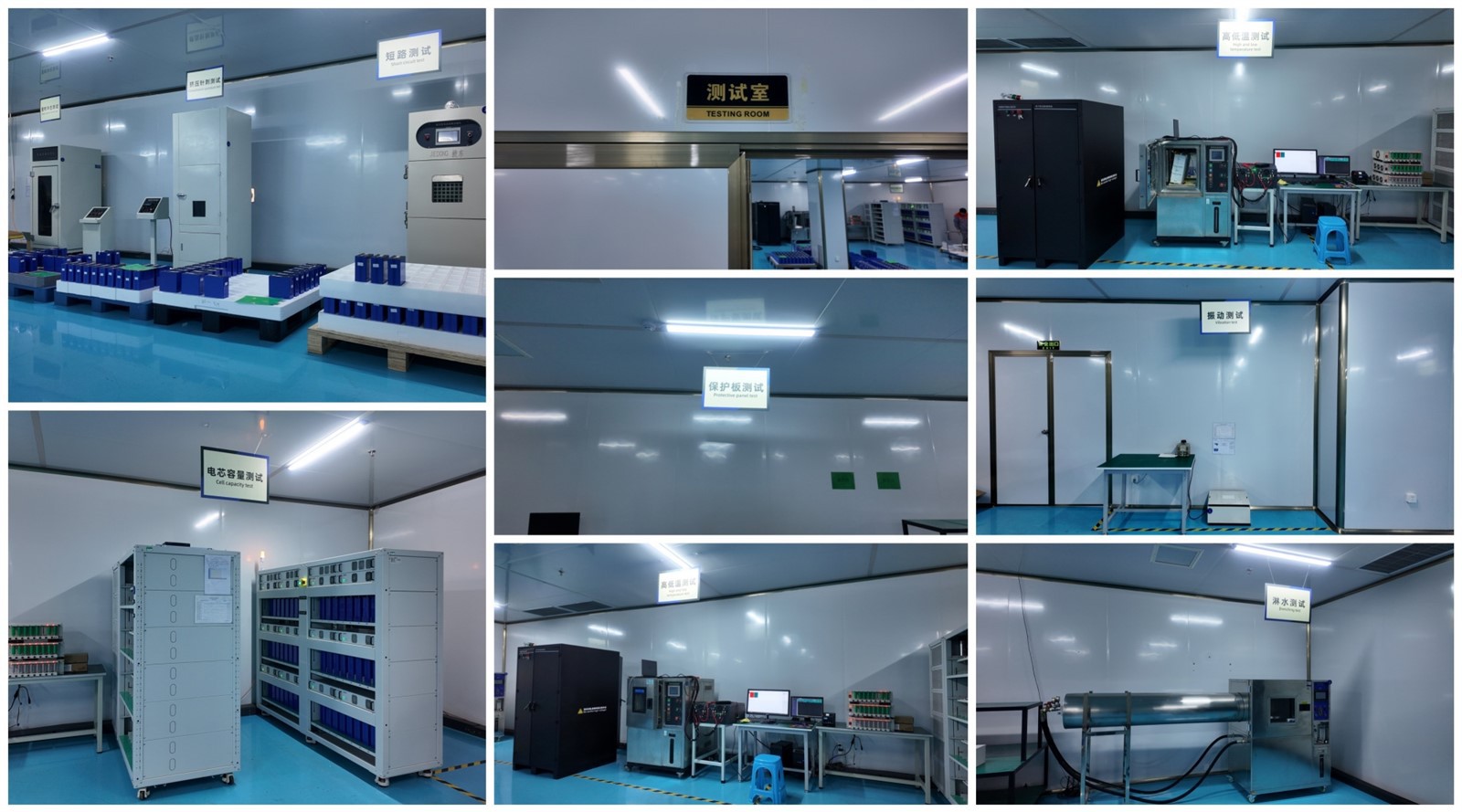
Factory Testing Room
FAQ
We're well-known as one of the leading inverters manufacturers and suppliers in China, featured by quality products and good price. Please rest assured to buy customized inverters made in China here from our factory.
hybrid inverter for commercial, BMS Integrated Inverters, All in one hybrid inverter