

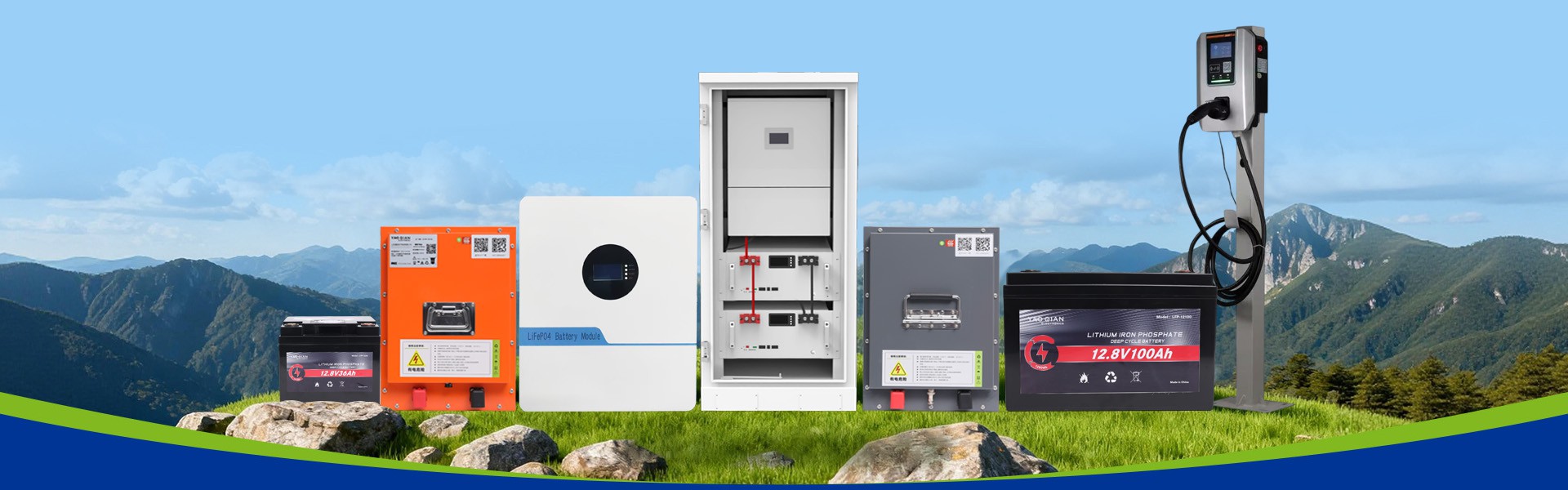
Energy Storage System
Industrial & Commercial Energy Storage Systems (ESS) | Modular LiFePO4 Solutions
Modern energy storage infrastructure requires modular architectures capable of seamless scaling from residential backup units to utility-scale megawatt containers. The Yaoqian energy storage portfolio features lithium iron phosphate (LiFePO4) chemistry paired with integrated Battery Management Systems (BMS), engineered for high thermal stability, cycle longevity, and deep-discharge resilience.
Units support parallel expansion architectures, allowing installers and system integrators to configure capacities matching precise load profiles. Built for commercial microgrids, industrial peak shaving, and residential PV pairing, systems integrate bidirectional power conversion and multi-level fault protection to maintain continuous grid stability under fluctuating load conditions.


Stackable All-in-One Hybrid Systems:
Modular residential units combining hybrid inverters and stackable LiFePO4 battery modules, supporting plug-and-play installation without complex cabling.
Wall-Mounted ESS Series:
Compact space-saving enclosures utilizing prismatic LiFePO4 cells, optimized for residential garages and light commercial utility rooms.
Rack-Mounted Modular Battery Modules:
19-inch standard rack units designed for telecommunication base stations, server rooms, and scalable industrial energy cabinets.
Commercial & Industrial (C&I) Air-Cooled Cabinets:
Integrated outdoor energy cabinets (e.g., 20kW/64kWh configurations) featuring forced-air thermal management, aerosol fire suppression, and heavy-duty structural steel housing.
Containerized Utility ESS:
Fully integrated megawatt-scale container units equipped with liquid or air thermal regulation, medium-voltage transformation, and centralized SCADA monitoring.
Key Performance & Design Features
Cell Chemistry: Utilizes Grade-A prismatic LiFePO4 (LFP) cells rated for 6,000+ cycles at 80% Depth of Discharge (DOD) under 25°C operational parameters.
Multi-Layer BMS Architecture: Dual-CPU master-slave BMS monitors individual cell voltage, module temperature, state of charge (SOC), and state of health (SOH) in real-time, executing active balancing up to 200mA.
Thermal Management: Engineered with internal air-flow channels and optional closed-loop HVAC or forced-air cooling to maintain operating temperatures between -20°C and 55°C.
Inverter Compatibility: Native communication protocols (CAN 2.0, RS485, Modbus RTU) ensure seamless handshaking with mainstream global hybrid inverter brands.
Structural Enclosure: Sheet metal housings treated with outdoor-grade anti-corrosion powder coating, achieving IP54 to IP65 ratings for harsh environmental deployments.
Applications
Commercial & Industrial Peak Shaving:
Mitigates demand charges by discharging stored energy during peak tariff windows.
Microgrid & Off-Grid Power:
Operates as a primary AC source or backup microgrid hub for remote agricultural facilities, islands, and telecom towers.

Solar PV Self-Consumption:
Stores surplus photovoltaic generation during daytime hours for evening load shifting and zero-export compliance.
EV Fast-Charging Station Buffering:
Supplements grid capacity constraints at electric vehicle charging hubs during high-demand transient loads.
Manufacturing & Quality Control
Automated Cell Sorting:
Automated grading lines sort cells based on internal resistance (<= 0.5mOhm) and nominal voltage variance (<= 5mV) prior to pack assembly.
Laser Welding Technology:
Automated laser welding stations secure busbars to terminal poles, guaranteeing consistent low-resistance electrical connections across multi-parallel strings.
EOL Electrical Testing:
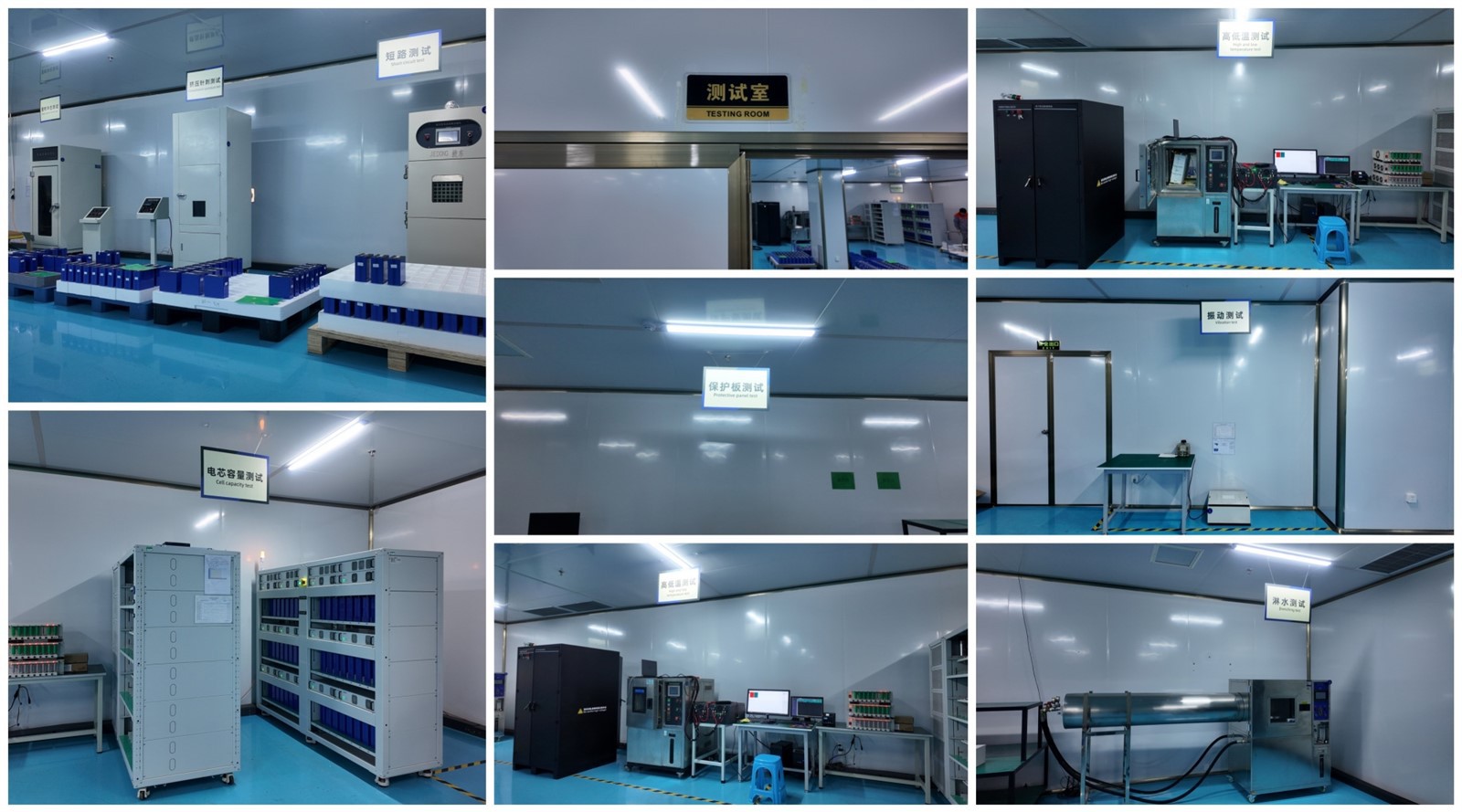
Every assembled system undergoes automated End-of-Line (EOL) testing, including 100% full-load aging tests, dynamic pulse discharge tests, and high-potential (Hi-Pot) dielectric strength testing up to 2500VDC.
Traceability Management:
Laser-etched QR codes on individual modules track raw material batch numbers, welding parameters, and testing logs throughout the production lifecycle.
Customization / OEM & ODM
Electrical Parameter Adaptation:
Customized nominal voltage ranges (48V low-voltage architectures to 800V high-voltage C&I systems) tailored to project inverter specifications.
Enclosure & Branding:
Custom sheet metal dimensions, IP ratings, exterior color painting (RAL color matching), and silk-screened or laser-engraved corporate logo plates.
Software Integration:
Customized BMS firmware communication protocols, HMI interface languages, and cloud monitoring API integrations for white-label distributors.
Factory Testing Room
FAQ
We're well-known as one of the leading energy storage system manufacturers and suppliers in China, featured by quality products and good price. Please rest assured to buy customized energy storage system made in China here from our factory.