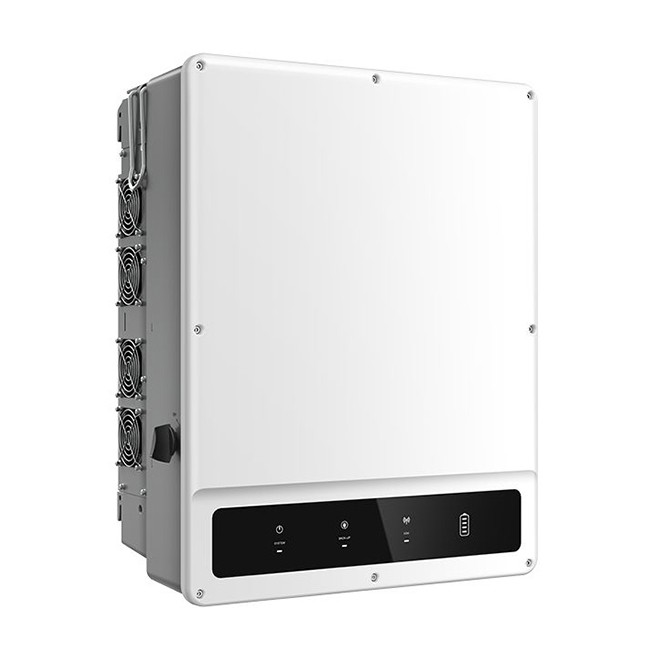
Hybrid Inverter
A hybrid inverter is a new type of inverter that converts the direct current (DC) generated by solar panels into alternating current (AC) for home use, and can also use a battery bank to provide power in the event of a power outage. Hybrid inverters can also monitor and intelligently control the current between the solar panels and the battery bank, achieving more efficient energy utilization.
Hybrid inverters have the following characteristics:
- They can convert the DC power from solar panels into AC power needed for the home;
- They can work with a battery bank to provide power during power outages;
- They can monitor and control the current between the solar panels and the battery bank for more efficient energy utilization.
Grid-Tied System
A grid-tied system refers to connecting a solar power system directly to the power grid, enabling joint power supply from both the solar panels and the grid. When the solar panels generate electricity, any excess power is fed into the grid; when the solar panels cannot meet the power demand, the grid provides the necessary power.
The characteristics of a grid-tied system are as follows:
- It combines solar panels and the power grid for efficient use of electricity;
- The grid provides backup power to the solar panels, ensuring power supply quality;
- It requires support from the power company and a legal connection license.
Differences between Hybrid Inverters and Grid-Tied Systems
Both hybrid inverters and grid-tied systems utilize solar power generation technology, but there are some significant differences between them:
- Different functions: The main function of a hybrid inverter is to coordinate the solar panels and battery bank to supply and store electricity for the home; a grid-tied system organically combines solar panels and the power grid for efficient utilization and joint supply of electricity.
- Different application scenarios: Hybrid inverters are suitable for small-scale applications such as areas with power shortages, disaster relief backup power, and power sources for land and marine monitoring instruments; grid-tied systems are suitable for large-scale solar power plants, industrial applications, and residential applications in urban areas.
- Different technical requirements: Hybrid inverters have relatively low requirements, are easy to install, and can be remotely monitored via a mobile app; grid-tied systems require a legal connection license and support from utility companies, and installation and commissioning require professional technicians.